
5 ways to get your students' attention (without losing your voice)
12/20/20252 min read
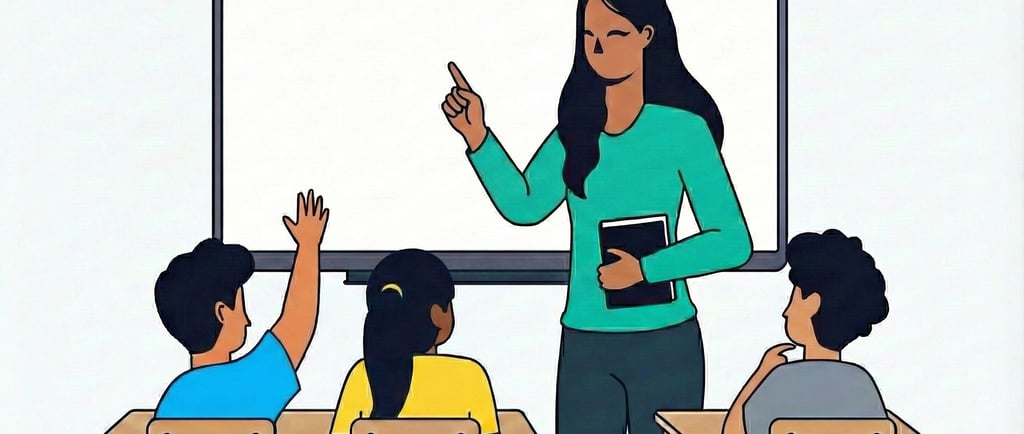
You know that moment when you've just given your class a group activity, and now you need to bring everyone back together for the debrief? Or when you walk into the classroom and everyone's chatting away, completely oblivious to your presence?
Yeah, shouting "Come on! Come on!" over the noise isn't going to cut it. Trust me, I've been there.
So here are five techniques I've found actually work for regaining control of a chaotic classroom—without destroying your vocal cords in the process.
1. The Countdown Method
This is my go-to technique, and it works surprisingly well with older students and even adults.
Simply count backwards from three: "Three... two... one."
If your classroom is particularly loud or your voice doesn't carry well, start from ten instead. Or even five. The key is giving yourself enough time for your voice to reach everyone and for students to realize something's happening that requires their attention.
The countdown creates a natural sense of urgency. Students instinctively know that when you hit zero, they need to be quiet and focused.
2. Call and Response
This one's especially effective with younger grades.
You establish a pattern where you say something, and they respond with something specific. The classic example: you shout "Class class!" and they respond "Yes yes!"
You can get creative with this—make up your own call and response that fits your classroom personality.
The beauty of this technique is that even students who aren't paying attention will notice others responding, and they'll look up to see what's happening. Before you know it, you've got everyone's attention.
3. The Light Flicker
Here's a non-verbal option that saves your voice entirely.
Simply flick the classroom lights on and off a couple of times.
This is particularly useful at the end of a long day when you're tired and your "teacher voice" is running on empty. Not everyone has the same vocal power, and that's okay. The light flicker is a visual cue that cuts through the noise without requiring any vocal effort from you.
4. The Silent Stare
Sometimes the most powerful thing you can do is... nothing.
Just stand there in silence and start making eye contact with individual students.
When you lock eyes with a student who's talking or messing around, it creates this moment of discomfort (in a good way). They'll stop what they're doing and settle down. Then their conversation partner will notice, look up to see what happened, and catch your eye too.
You keep doing this—moving from student to student with deliberate eye contact—and gradually, the chaos settles. It's almost like a ripple effect spreading across the room.
No shouting required.
5. The Visible Timer
If you've given students a task to complete, put a timer where everyone can see it.
This could be on your whiteboard, projected on the screen, or even a physical kitchen timer if you don't have a multimedia classroom.
When the timer goes off, students automatically know it's time to wrap up and refocus. It creates a clear boundary between activities without you having to interrupt them or compete with their voices.
Making It Work for You
The key with all of these techniques is consistency. Pick one or two that feel natural to you and stick with them. Your students will learn what these cues mean, and over time, the transitions will become smoother and smoother.
And honestly? Mixing them up based on the situation keeps things fresh and effective. Some days you'll need the countdown, other days the silent stare works better.
You'll figure out what works for your classroom, your students, and your teaching style.
Join the thousands who never let a classroom without a teacher


Platform
Company
Careers
Resources
FAQs
© 2025 covur.app. All rights reserved.