
Build a Teacher Resume That Stands Out in 2026
12/21/20253 min read
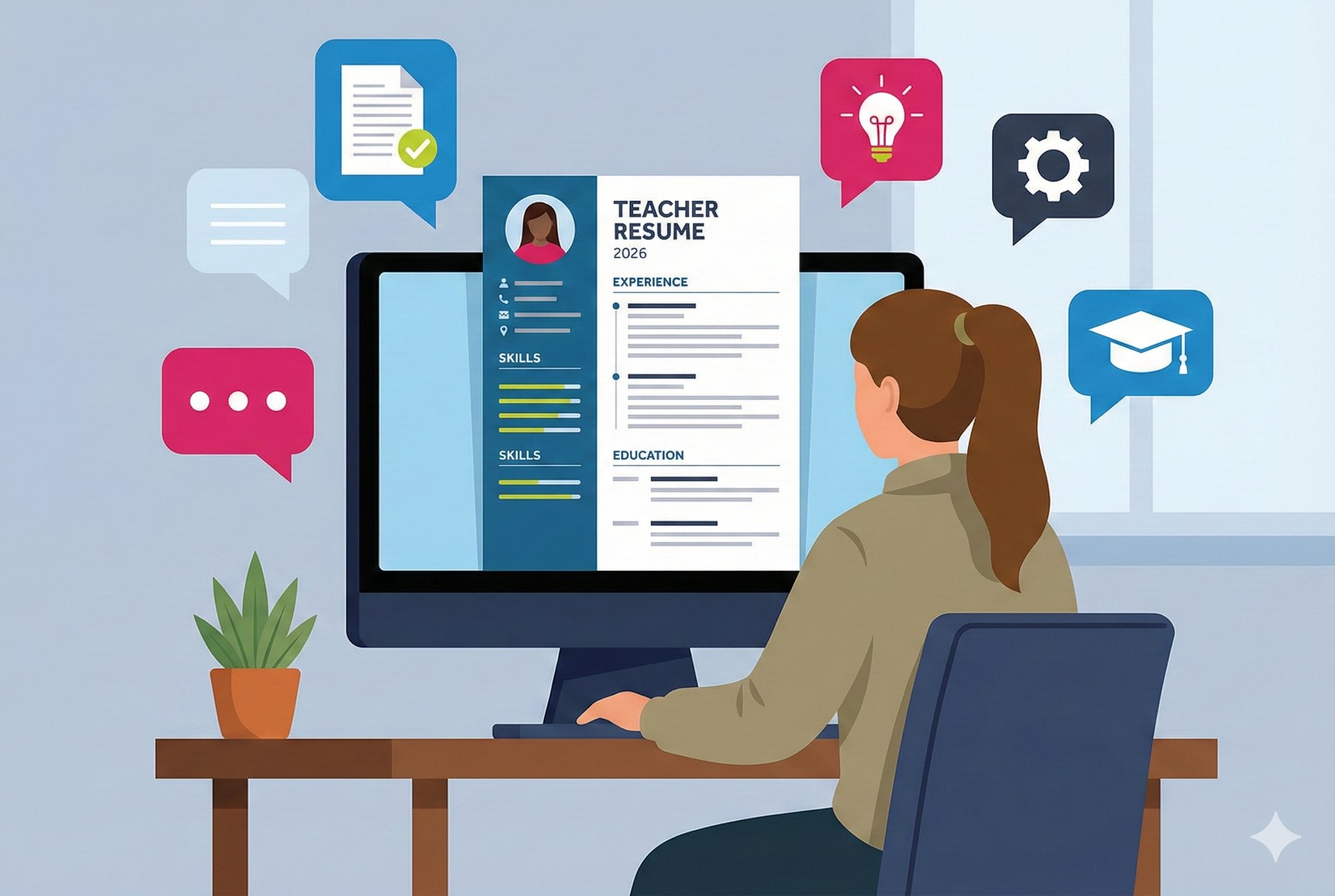
Amidst the hiring spree for the new term, it's important you upgrade your resume to new industry standards for how resumes should look like.
Let’s start with addressing the elephant in the room: your resume is not meant to be your biography.
Schools don't really need to know what you studied back in 2010. They're also not that interested in reading about your day-to-day activities. And I know this might sound counterintuitive, but stick with me here.
What Schools Are Really Looking For
When you write that you teach grade eight math, handle lesson planning, or organize parent-teacher meetings, you're describing the baseline. It's what every teacher does. It's the minimum expectation for the role.
Think about it this way—when you list these daily responsibilities, you're basically describing how you spend your time. But so is every other teacher applying for that position. It doesn't help you stand out from the other 50 applications on the principal's desk.
Think of Your Resume as a Sales Pitch
Here's a framework to work with. Think how would bringing you on board make things better for the school?
When companies pitch products to you, they don't just list features. They show you how the product will change your work or your life. Your resume needs to do the same thing.
Schools want to understand how hiring you will help them. They want to see your achievements—what you've actually accomplished in your previous roles. Because those achievements give them confidence that you could do great things at their organization too.
For example, if you started a book club at your school, that's tangible and meaningful. The school you're applying to might also want to start a book club, and you've already done it successfully.
If you've managed to pull off large-scale events, that demonstrates real capability. Schools often want to do similar things and need someone with that experience.
These are the kinds of things that belong on your resume.
The Structure
First, some basics that are worth mentioning:
Keep your resume to a maximum of two pages. Nobody has time to read through five or ten pages.
Include only your relevant experience. Not everything you've ever done.
Here's what should actually be on your resume:
1. Summary
This is a brief overview at the top that succinctly summarizes your whole career as a teacher.
For example: "Reflective educator with ten years of experience in curriculum development and student engagement initiatives." Focus on your value and track record, rather than your personal career objectives. You're not supposed to write something like "I am hoping to join an organization for my professional development." That's focused on what you want, not what you have to offer.
2. Work Experience
This is the most important section, so let's dig into it.
Don't list your day-to-day tasks or job descriptions. Focus on results and achievements instead.
If you improved the overall results of your grade nine students, explain how you did it and what the outcome was.
Here's a formula that works really well: "Accomplished X by the measure of Y by doing Z."
Try to use this structure in your bullet points as much as possible.
For example: "Increased grade 9 math proficiency by 15% as measured by end-of-year assessments by implementing weekly review sessions and a peer tutoring program."
See how that tells a complete story? It shows what you achieved, how you measured it, and what you actually did to make it happen.
3. Education
Keep this simple. Just include your most recent degree. You don’t need to mention which school or college you went to in 1999.
4. Certifications
If you have relevant certifications, include them here. Things like teaching licenses, specialized training certifications, or professional development credentials that are directly related to the role you're applying for. Keep it focused and relevant.
5. Skills
Only list skills that are relevant to the teaching position you're applying for.
You might be an amazing singer or really into knitting, but those aren't relevant here. Focus on things like curriculum design, instructional design, or technical skills. A lot of schools are actively looking for teachers with strong technical expertise these days.
What You Can Leave Out
Here's what doesn't need to be on your resume:
Hobbies that aren't relevant to teaching.Your home address. References or the line "references available upon request"—if a school wants references, they'll ask for them.
The Bottom Line
Stop thinking of your resume as a record of what you do every day. Start thinking of it as a pitch for why hiring you would be a great decision for the school.
Focus on what you've accomplished, not just what you're responsible for. Focus on results, not just activities.
That's what opens doors.
Join the thousands who never let a classroom without a teacher


Platform
Company
Careers
Resources
FAQs
© 2025 covur.app. All rights reserved.